

How to Change Your Team's Process Without Getting Fired
Every week I get some version of the same message.
"I agree with everything you write. My standups are status reports. Our retros change nothing. We spend more time in ceremonies than writing code. But I can't say any of this out loud. I have a mortgage. I have a kid starting school. I need this job."
I get it. I've been there. I've been the senior engineer who sees the dysfunction clearly and has to decide whether saying something is worth the risk. Sometimes I said something and it worked. Sometimes I said something and got labeled "not a team player." Once I nearly got put on a performance plan for suggesting we cut a meeting that everyone privately agreed was useless.
So this isn't a post about being brave. This is a post about being strategic. Because the difference between the engineer who changes a broken process and the engineer who gets fired for complaining about it usually isn't what they said. It's how and when and to whom they said it.
Nobody Ever Got Fired For Showing a Number
Opinions get you in trouble. Data doesn't.
"Our standups are a waste of time" is an opinion. It makes people defensive. Especially the people who introduced the standups, champion the standups, or have built their identity around facilitating the standups.
"Our team spent 47 hours in meetings last sprint. Here's the breakdown by meeting type. Here's the output we shipped in the same period" is a data point. It doesn't attack anyone. It doesn't call anything a waste. It just shows a number and lets the room do the math.
I learned this the hard way at a company where I straight up told my manager that our sprint planning was theater. His face changed. The conversation ended. Nothing improved. Three months later I tried again, but this time I tracked every meeting for two sprints. Hours per meeting type. Number of decisions actually made in each meeting. I put it in a spreadsheet. One page. No commentary. Just the data.
Same manager looked at it and said "huh, we should probably fix this." Same message. Completely different delivery. The spreadsheet didn't threaten his authority. My opinion did.
If you want to change something, your first move is never a suggestion. Your first move is measurement. Track the time. Count the meetings. Document the outcomes. Build the spreadsheet. Then let the spreadsheet do the talking.
Find Your Ally Before You Find Your Battle
The worst thing you can do is bring up process problems in a group setting where nobody expects it. You're standing in a retro, frustrated, and you say "honestly I think half our ceremonies are pointless." The room goes quiet. Your manager makes a note. The Scrum Master feels attacked. You just created six opponents and zero allies.
Before you say anything in public, find one person who agrees with you in private. Usually it's not hard. You already know who rolls their eyes during standup. You know who checks Slack during sprint review. You know who muttered "this could have been an email" under their breath last Thursday.
Have a conversation with that person. Not a rant. A conversation. "Hey, I've been thinking about how we spend time in meetings. I tracked it for two weeks and the numbers are kind of wild. Can I show you?"
Now you have two people looking at a spreadsheet instead of one person complaining in a retro. That's a fundamentally different situation. Two people with data is the beginning of a proposal. One person with an opinion is the beginning of a conflict.
At one company I worked at, I spent three weeks having quiet one-on-one conversations with other senior engineers before I ever raised anything formally. By the time I brought it up in a team lead meeting, four people in the room already agreed with me. The conversation wasn't. The conversation was "several of us have been looking at the data and we think there's an opportunity to reclaim some time." Different framing. Different outcome.
Run a Pilot, Not a Revolution
Don't propose killing the standup. Propose an experiment.
"I think we should eliminate daily standups" triggers every immune response an organization has. People who designed the process feel attacked. People who are comfortable with the routine feel threatened. Management worries about losing visibility. The Scrum Master worries about losing relevance.
"What if we tried async standups for two sprints and measured the impact?" triggers almost nothing. It's temporary. It's measurable. It's reversible. Nobody is being told they were wrong. You're just running an experiment. And experiments are supposed to be Agile, right?
This is the move that works almost every time. Frame every change as a time-boxed experiment with a clear success metric. Two sprints. We'll track deployment frequency, bugs reported, and team satisfaction before and after. If it doesn't work, we go back.
Nobody reasonable says no to a two-sprint experiment. And if they do, that tells you something important about whether this organization is capable of changing at all.
I've used this approach to eliminate sprint planning at one company, cut standups to twice a week at another, and replace retrospectives with monthly team health surveys at a third. Every time, the "experiment" worked well enough that nobody wanted to go back. But the entry point was never "this is broken." The entry point was always "let's try something for two weeks."
Speak the Language of the People Who Can Say Yes
Engineers think in terms of efficiency. Managers think in terms of risk. Executives think in terms of cost.
If you pitch a process change to your engineering peers, talk about efficiency. "We're spending 22 hours per sprint in meetings. That's 55% of our available coding time."
If you pitch to your engineering manager, talk about risk and delivery. "Our deploy frequency has dropped 30% since we added the third weekly sync. We're shipping slower and the gap between what we promise in sprint planning and what we deliver is growing."
If it somehow reaches a director or VP, talk about money without pretending the model predicts output. "Using our observed attendance and duration plus the loaded-rate assumption shown here, recurring meetings model to this amount. I propose a four-week reduction trial; we will measure coordination and delivery before claiming any savings."
Same problem. Three different languages. The engineer hears time. The manager hears delivery risk. The executive hears an auditable scenario with a proposed test.
Most engineers make the mistake of speaking engineer to everyone. They talk about how inefficient meetings are, how frustrating the ceremonies feel, how the process doesn't make technical sense. And the people with the power to change things nod politely and nothing happens. Because efficiency isn't what they optimize for. They optimize for risk, predictability, and cost.
Learn to translate your frustration into their vocabulary and suddenly you're not complaining. You're proposing.
Know What You're Actually Asking For
"Our process is broken" isn't a proposal. It's a complaint. And complaints don't have next steps.
Before you bring anything to anyone, know exactly what you're proposing. Not "we should do less Agile." That means nothing. But "I propose we replace daily standups with an async Slack update three times a week, and use the recovered 2.5 hours per sprint for focused development time. We run this for two sprints and measure deploy frequency and bug count before and after."
That's a proposal. It has a specific change, a specific duration, and a specific way to measure success. It respects the existing structure while suggesting a modification. It doesn't call anyone wrong. It doesn't require anyone to admit failure.
The more specific your proposal, the easier it is to say yes. The more vague your complaint, the easier it is to ignore.
Pick Your Battles by Picking Your Wins
Don't start with the biggest dysfunction. Start with the smallest winnable fight.
If your standups, sprint planning, retros, and demo meetings are all broken, don't propose overhauling everything. Pick the one that's easiest to change and most visible in its impact. Usually that's the standup because it happens every day and the waste compounds fastest.
Win that one. Measure the improvement. Document it. Now you have a track record. Now when you propose changing sprint planning, you're not the person who complains about process. You're the person who improved the standup and has the data to prove it.
Credibility compounds the same way technical debt does, except in the right direction. Each small win makes the next proposal easier. Each documented improvement makes you harder to dismiss.
I've watched engineers try to revolutionize their team's entire way of working in one shot. It never works. The organization's immune system is too strong. But I've watched engineers change everything over six to twelve months by winning one small battle at a time, documenting each result, and using each win as leverage for the next conversation.
It's slower. It's less satisfying than a dramatic confrontation. But you keep your job and the process actually changes.
The Conversation You Might Need to Have With Yourself
Sometimes the process isn't going to change. Not because your proposal is bad. Not because you didn't have the data. But because the organization doesn't want to change. The ceremonies exist because someone powerful wants them to exist, and that person isn't going anywhere.
If you've tried the data approach, found allies, proposed experiments, spoken the right language, and the answer is still no, that's information too. Not about the process. About the company.
At that point you have two honest options. Accept the process and find ways to do good work within it. Or start looking for a team that already works the way you want to work. Both are legitimate. Neither is failure.
What isn't legitimate is staying, doing nothing, and complaining about it for years. I've been that person. It corrodes you. The resentment builds. Your work suffers. Your relationships with your team suffer. And the process still doesn't change.
The strategic move is always clarity. Know what you want. Try to get it. If you can't, decide what that means and act on it. That's not giving up. That's being honest about what you control.
The Short Version
Measure before you complain. Find an ally before you fight. Propose an experiment, not a revolution. Speak the language of whoever can say yes. Be specific about what you want. Win small before you win big. And if it doesn't work, be honest with yourself about what that means.
None of this is exciting. None of it will go viral on LinkedIn. But it's how things actually change inside organizations, one quiet conversation at a time, backed by one honest spreadsheet.
The engineers who change their teams aren't the loudest ones. They're the ones who figured out that being right isn't enough. You also have to be strategic.
Benjamim Castell writes about the distance between process as promised and delivery as practiced.
Most of them were trapped in what I call Risk Management Theater and didn't even know
Keep reading

I Delivered Three Major Projects and Got Fired Anyway
Shipping software won't save your career. Here's what I learned after five years of being right about the technology and wrong about everything else.
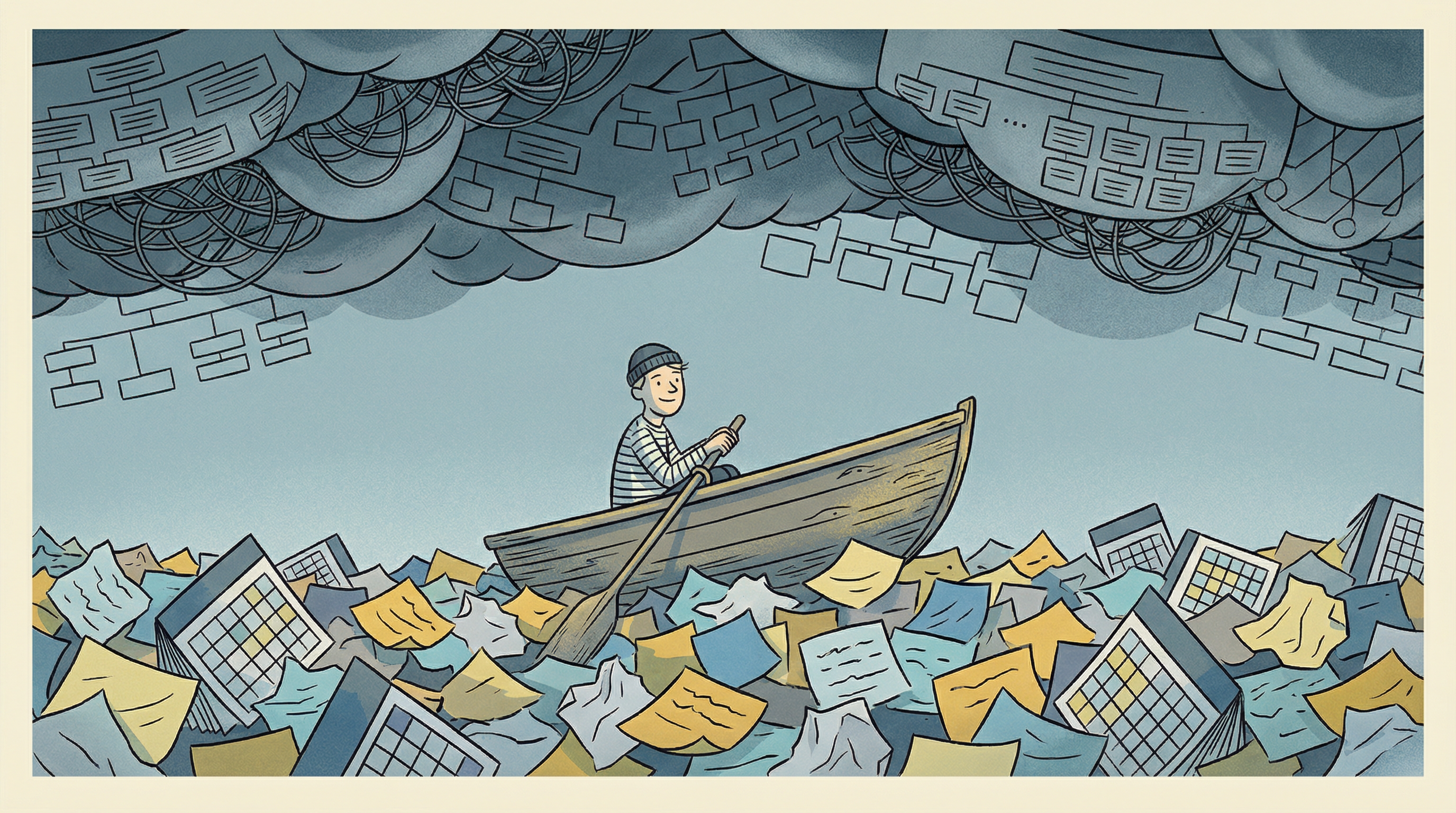
The Developer`s Guide to Surviving Agile Transformation
With 47-84% of Agile transformations failing, this isn`t a guide to embracing change, it`s a practical survival manual for developers weathering the corporate storm while protecting their time, sanity, and ability to ship actual code.
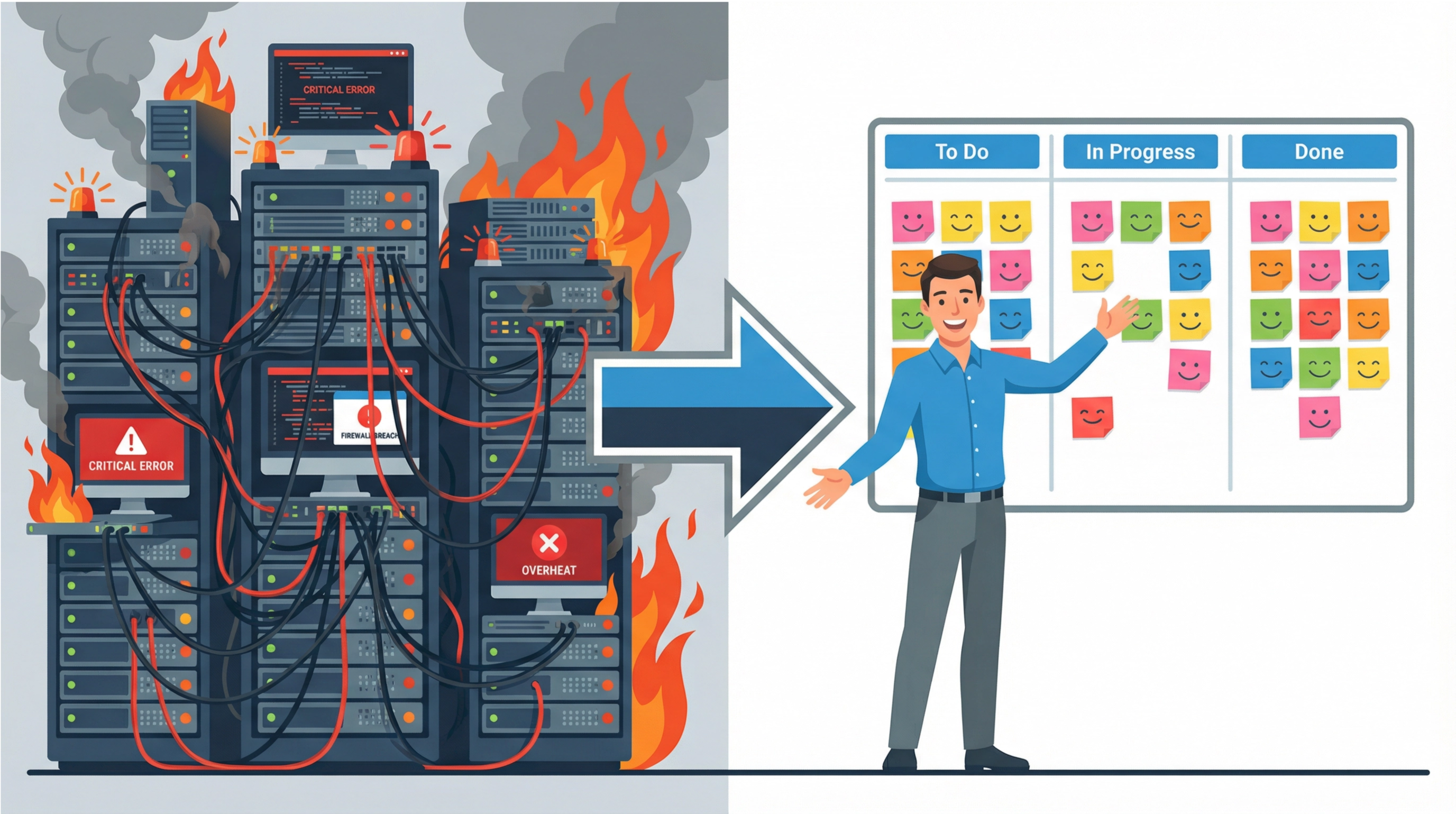
We Paid $150k/Year for an Agile Coach Who Had Never Written a Line of Production Code
A non-technical Agile coach spent two years redirecting every engineering problem into a process conversation. Here`s what happened, what it cost us, and what actually makes engineering teams effective.
Get the next war story in your inbox
Independent essays and practical models about what the process claims versus what actually ships. Published under a protected pen name. Free, no spam, unsubscribe anytime.
No certifications sold. No process religion. Unsubscribe anytime.