

The Scrum Prison: When Excessive Structure Kills Creativity
That planning poker meeting just hit the 90-minute mark. Your team architect is explaining—again—why the authentication refactor can't be a "5" because it touches three services. The product owner needs a number, any number, for their burndown chart. Someone suggests splitting the story. Now you're debating whether "Create database migration" is a 2 or a 3.
The authentication system that's actually held together with duct tape and prayer? Still broken.
This is Scrum working exactly as designed.
The Promise vs. The Reality
Scrum was supposed to make software development more predictable, more collaborative, more humane. It would free teams from waterfall's rigid planning and give them the flexibility to respond to change.
Instead, we got a different kind of rigidity. One that wraps itself in the language of empowerment while creating an elaborate theater of process. One that turns creative problem-solving into an assembly line of ticket processing.
Scrum's excessive structure doesn't help most engineering teams deliver better software. It actively prevents the kind of deep work, exploration, and creative problem-solving that produces genuinely good systems.
How Scrum's Artificial Time Boxes Create Unnecessary Pressure
Two-week sprints. The heartbeat of Scrum. Predictable cadence, regular delivery, continuous feedback.
Except software engineering isn't a predictable cadence kind of job.
Some problems require three days of focused investigation before you even know what you're building. Others need a solid week of heads-down coding with minimal interruption. Sometimes you need a month to properly architect a complex feature.
Scrum doesn't care about the natural rhythm of your work. Everything must fit into the sprint box.
It's day 9 of your sprint. You've completed the main feature, but you've discovered a related performance issue. Six hours to fix properly. You know it'll cause problems later. You know it's the right thing to do now while the code is fresh in your mind.
You look at the sprint board. This work isn't in scope. Not pointed. Not committed.
If you do it, you're "gold plating." If you don't, you're shipping technical debt knowingly.
So you create a ticket. Point it. Groom it. Put it in the backlog where it will sit for three sprints before anyone remembers why it mattered. By then, the context is gone. The "quick fix" is now a two-day archaeology expedition.
Time boxes transform "I should fix this while I'm here" into a bureaucratic process that ensures the fix never happens.
The sprint boundary becomes an artificial constraint that has nothing to do with the work itself and everything to do with making project managers comfortable.
Story Points: The Illusion of Predictability in Creative Work
Story points are bullshit.
Not because estimation is impossible—experienced engineers can gauge complexity reasonably well. But the way Scrum uses story points creates an elaborate fiction of predictability that serves management's psychological needs while adding zero value to engineering work.
Story points were supposed to help teams understand relative complexity and plan accordingly, without the pressure of time-based estimates.
What they actually do: create an arbitrary scoring system that gets weaponized into a velocity tracking metric that has nothing to do with actual value delivered.
Sprint velocity becomes a KPI. Teams game their estimates—inflating points to make velocity look better, or deflating them to seem more productive. Hours get spent in pointing sessions arguing about whether something is a 5 or an 8, as if that distinction has any meaning.
The deeper problem: story points assume software engineering is predictable work that can be decomposed and measured.
It's not. It's creative problem-solving wrapped in technical constraints.
When you're building a new feature, you don't know what you'll discover until you're in the code. The existing architecture might make it trivial. Or you might need to refactor three layers deep to do it right. You might realize halfway through that the feature itself is solving the wrong problem.
None of this fits into story points.
Your team is pointing a story: "Add export functionality to reports."
Someone says 3—it's just adding a button and calling an existing export library.
Someone else says 8—the export library doesn't support the new report format, we'll need to extend it.
You investigate. Five minutes of code review reveals the export library was written three years ago, hasn't been touched since, and is now incompatible with your current data pipeline. The "3 point story" is actually a week of refactoring followed by two days of feature work.
How do you point that? 13, obviously. But now your sprint is overcommitted. The product owner suggests splitting it. "Can we just do the button this sprint and the export next sprint?"
Sure, if you want to ship a button that doesn't work.
This dance happens because story points create the illusion that we can predict creative work. We can't. Forcing teams to pretend otherwise wastes time and creates perverse incentives.
Daily Standups: Micromanagement Disguised as Collaboration
The daily standup. Fifteen minutes. Three questions. Should be simple.
Instead, it's the daily status report meeting that everyone dreads and no one finds useful.
The theory: quick synchronization helps the team stay aligned, identify blockers, and coordinate work.
The practice: eight people stand in a circle (or stare at a video call) while each person recites what they did yesterday, what they'll do today, and whether they're blocked. The actual information exchange takes three minutes. The other twelve are performative.
Most of what's shared in standup is either obvious ("I'm still working on the story I was working on yesterday") or irrelevant ("I fixed some minor bugs"). The things that actually matter—deep technical decisions, architectural trade-offs, emerging problems—don't fit into the standup format.
Worse, standups create an implicit expectation of visible progress every single day.
This is poison for the kind of work engineers actually do.
Some days you're reading code trying to understand a complex system. Some days you're debugging an intermittent issue that only shows up in production. Some days you're stuck on a hard problem and need to think.
None of this produces the kind of progress that sounds good in standup.
Engineers learn to game it. Make sure to have something that sounds like progress every day, even if it means context-switching away from deep work to create visible activity. Split time across multiple small tasks instead of focusing on one complex problem.
The standup becomes a forcing function for shallow work.
You're investigating a complex concurrency bug. Two days reproducing it, reading code, forming hypotheses. You haven't written a line of production code. You don't have a fix yet. You're not blocked—you're just doing the unglamorous work of actually understanding the problem before you try to solve it.
When it's your turn in standup, you have to say something. "Yesterday I was investigating the concurrency issue. Today I'll continue investigating it."
You can feel the implicit judgment. Are you stuck? Do you need help? Why is this taking so long?
The next day, you say the same thing. Now people are definitely wondering if you're blocked. So you shift approach. You start mentioning specific files you looked at, hypotheses you tested, things you ruled out. The update takes three minutes instead of 30 seconds.
Everyone else is checking Slack.
The standup didn't help you solve the bug. It just added pressure to show visible progress on a problem that requires invisible thinking.
For teams that genuinely communicate well, standups are redundant. For teams that don't, standups don't fix the underlying communication problems—they just formalize the dysfunction.
The Hidden Cost of Sprint Planning Meetings
Do the math on sprint planning.
Eight-person engineering team. Every two weeks, you spend two hours in sprint planning. That's sixteen person-hours per sprint, or thirty-two person-hours per month, or 384 person-hours per year.
Nearly ten full work weeks spent deciding what work to do instead of doing work.
And that's just sprint planning. Add in backlog grooming (two hours every sprint), retrospectives (one hour), sprint reviews (one hour), and daily standups (fifteen minutes × ten working days), and you're spending roughly 20% of your team's time in Scrum ceremonies.
One full day per week. Every week. Forever.
The defense: "But we need this coordination! How else will we stay aligned?"
What if the need for constant coordination meetings is a symptom of Scrum's structure rather than a solution to an inherent problem?
When you organize work around two-week sprints with committed story points and velocity tracking, you create artificial dependencies. The team needs to agree on what will fit in the sprint. Stories need to be pointed. Work needs to be coordinated to hit the sprint goal. All of this requires meetings.
In a more flexible system, much of this coordination happens naturally. Engineers pick up work when they finish their current task. They coordinate directly with the people they need to coordinate with, when they need to. They don't need to pre-plan two weeks of work because they're not operating in artificial time boxes.
The hidden cost isn't just the time in meetings. It's the context switching, the mental overhead of maintaining sprint commitments, and the opportunity cost of what your team could build if they spent 20% more time actually engineering.
The Scrum Industrial Complex
Nobody wants to admit this: Scrum persists not because it works, but because it's an industry.
There are Certified Scrum Masters. Training courses. Coaches and consultants. Books, conferences, frameworks built on top of Scrum. Entire careers depend on Scrum remaining the default way to organize software teams.
When Scrum fails—and it often does—the diagnosis is never that Scrum itself is the problem. You're not doing Scrum correctly. You need more training. Better facilitation. Stricter adherence to the ceremonies. Maybe a Scrum coach.
This is the trap. Scrum creates its own justification. The structure generates problems (coordination overhead, artificial constraints, velocity pressure), then Scrum practitioners offer more structure as the solution.
The best engineering teams I've worked with barely do Scrum at all. They keep a prioritized backlog. They communicate constantly. They deploy frequently. They reflect and improve.
But they've shed most of the ceremony, the story points, the sprint commitments, and the formal roles.
They've escaped the prison.
Liberating Your Team from Scrum's Constraints
You need less process, not different process.
A practical framework for gradually reducing Scrum overhead while maintaining (and likely improving) delivery:
Phase 1: Audit the Value
Week 1-2: Measure the cost
- Track actual time spent in all Scrum ceremonies for two weeks
- Calculate the total person-hours
- Have team members privately rate each ceremony's usefulness (1-10)
- Identify which ceremonies people find valuable vs. performative
Questions to ask:
- Which meetings could be async updates instead?
- Which meetings regularly run over time?
- What information do we share in ceremonies that could be communicated better another way?
Phase 2: Eliminate the Obvious Waste
Week 3-4: Start cutting
-
Cut standups to 3x per week instead of daily. Monday/Wednesday/Friday is plenty. If something urgent comes up between standups, people will communicate directly (they already do).
-
Make retrospectives optional. Send out a retrospective doc before the meeting. If three or fewer people have meaningful items to discuss, cancel the meeting and handle it async.
-
Eliminate story pointing poker. Replace with t-shirt sizes (S/M/L) assigned by whoever picks up the work. If they discover it's bigger than expected, they update the size and keep going. The goal is to communicate rough scope, not achieve false precision.
-
Shorten sprint planning. Thirty minutes to review priorities, answer questions, and clarify the next chunk of work. No commitment poker. No capacity planning. Just "here's what matters most right now."
Phase 3: Loosen the Time Boxes
Week 5-8: Reduce sprint pressure
-
Stop treating sprint boundaries as hard deadlines. If work is 90% done at sprint end, finish it in the next sprint. The artificial boundary isn't helping anyone.
-
Allow work to start mid-sprint. If higher priority work emerges, engineers can pick it up immediately instead of waiting for the next planning session.
-
Replace velocity tracking with deployment frequency. Track how often you ship to production. That's the real measure of throughput.
Phase 4: Embrace Flow
Week 9+: Transition to continuous flow
-
Maintain a prioritized backlog. This is the one artifact worth keeping. Always know what matters most right now.
-
Engineers pull work when ready. No sprint commitments. No capacity planning. Trust your engineers to manage their own workload.
-
Keep WIP limits. Encourage finishing work before starting new work, but enforce this culturally, not through ceremony.
-
Communicate continuously. Replace formal standups with a shared team channel where people post updates when useful, ask for help when stuck, and coordinate naturally.
-
Reflect regularly but flexibly. Every few weeks (not on a fixed schedule), ask: "What's slowing us down? What should we try differently?" This can be a 20-minute conversation over lunch.
The Minimal Viable Process
Strip away all the Scrum ceremony. What you actually need:
- Clear priorities: Someone (product, tech lead, team consensus) maintains a prioritized list of what matters
- Visibility: Everyone can see what's being worked on and what's next
- Communication: Easy ways to ask questions, share progress, and request help
- Feedback loops: Regular deployment, monitoring, and customer feedback
- Continuous improvement: Periodic reflection on what's working and what isn't
Notice what's not on that list: sprints, story points, daily standups, sprint planning, or burndown charts.
You can accomplish all five essentials with a prioritized backlog, a team chat channel, continuous deployment, and occasional team conversations. That's it.
The Pushback You'll Face
When you try to reduce Scrum overhead, you'll hear objections.
"But how will we know if we're on track?"
You're not on track now. Sprint commitments are fiction. Your burndown chart is fantasy. Replace these comfortable lies with actual data: deployment frequency, cycle time from start to production, customer feedback.
"Won't engineers just work on whatever they want?"
If you can't trust your engineers to pick appropriate work from a prioritized backlog, you have a hiring problem or a leadership problem. Scrum's structure won't fix that.
"Stakeholders need predictability."
Stakeholders need regular delivery and honest communication. Scrum gives them false predictability backed by story point calculations that bear no relationship to reality. Give them real predictability: "We deploy every day, and here's how you can see what's in each deployment."
"Our Scrum Master says we're just not doing Scrum right."
Of course they do. Consider the incentives. Their job exists because of Scrum.
What Good Looks Like
I've worked with teams that escaped Scrum's prison.
Engineers spent more time in deep work and less time in meetings. They took on complex problems that didn't fit neatly into sprint boxes. They refactored when they saw opportunities instead of creating tickets that would never get prioritized.
Product communication improved because it became continuous instead of concentrated in planning sessions. Questions came up, people asked immediately instead of waiting for the next ceremony.
Deployment frequency increased because there was no reason to wait for sprint boundaries. Features went out when they were ready, which was usually sooner.
Morale improved because engineers felt trusted to manage their own work instead of performing progress in daily standups.
The team became more responsive to urgent issues because they weren't locked into sprint commitments. When production broke or a customer issue emerged, they addressed it immediately instead of negotiating scope changes.
And delivery predictability actually improved. When you stop making fictional sprint commitments, you stop missing them. When you ship continuously, stakeholders see steady progress instead of waiting for sprint demos.
The Real Agile
The Agile Manifesto explicitly valued "individuals and interactions over processes and tools" and "responding to change over following a plan."
Scrum inverts this. It's all process and tools. All planning and commitment.
The manifesto's authors were rebelling against rigid waterfall processes that constrained creative work. They wanted flexibility, autonomy, and trust.
Scrum gave us a different rigid process that still constrains creative work. It just has shorter cycles.
Real agility means giving teams the autonomy to organize their work in whatever way produces the best results. It means trusting engineers to manage complexity without forcing them to pretend it's predictable. It means optimizing for learning and adaptation instead of artificial velocity metrics.
You can't get there by following Scrum more carefully. You get there by shedding Scrum's constraints and rediscovering what your team actually needs.
Most teams need way less than Scrum prescribes. Clear priorities, good communication, and trust.
Everything else is optional.
Breaking Free
The hardest part isn't finding an alternative process. It's giving yourself permission to question whether you need the structure at all.
Scrum has been the default for so long that many teams can't imagine working differently. The ceremonies feel mandatory. The roles feel essential. The structure feels like the only thing preventing chaos.
But that structure is often creating the chaos it claims to prevent.
Try this: What would happen if you canceled all Scrum ceremonies for two weeks? Not as a permanent change, just an experiment. Keep the prioritized backlog. Keep deploying. Keep communicating. Just skip the formal structure.
My bet: Very little would break. The work that matters would still get done. The team would find natural ways to coordinate. And you'd get back hours of time to actually build things.
That's not a sign you're doing Scrum wrong. It's a sign you never needed Scrum's prison in the first place.
The best process is the one that gets out of your team's way. For most engineering teams, that's way less structure than Scrum prescribes.
You don't need permission to work differently. You just need the courage to stop pretending the ceremonies are helping.
Benjamim Castell writes about the distance between process as promised and delivery as practiced.
Most of them were trapped in what I call Risk Management Theater and didn't even know
Keep reading
How to Calculate Story Points in Agile (and What the Formula Is Hiding)
There is no story point formula. How teams really calculate them with Fibonacci and planning poker, what the ritual costs, and the honest alternative.
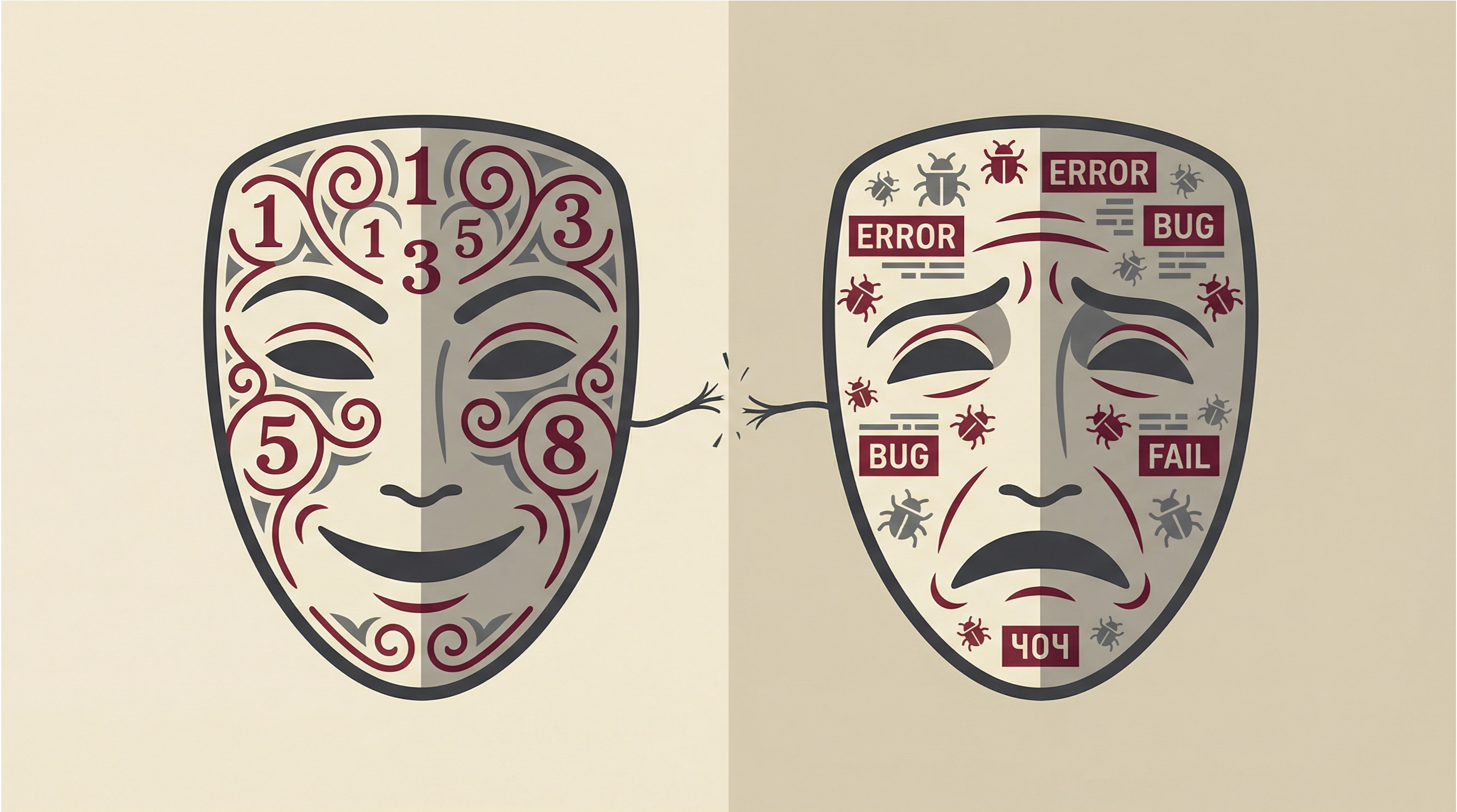
Why Agile Estimation Is Theater: The Case Against Story Points
Story points and estimation ceremonies waste 1,600+ hours per team annually. Stop training developers to predict the unpredictable and embrace uncertainty.

The Standup Tax: Why Your Daily Meeting Is a Hidden Financial Liability
Daily standups consume scheduled team time. Model that loaded cost with explicit inputs, then test whether the meeting creates enough value to justify it.
Get the next war story in your inbox
Independent essays and practical models about what the process claims versus what actually ships. Published under a protected pen name. Free, no spam, unsubscribe anytime.
No certifications sold. No process religion. Unsubscribe anytime.