
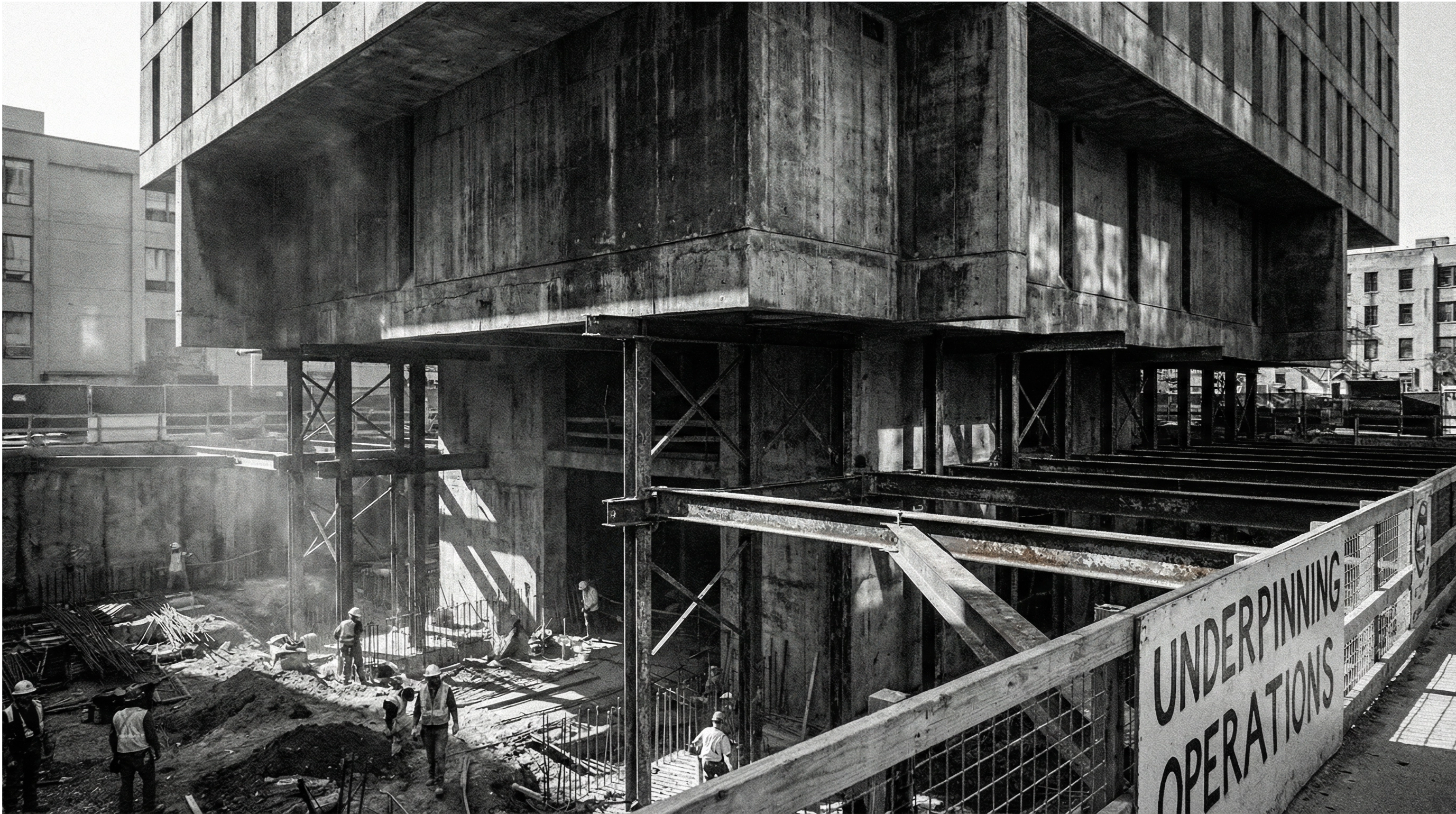
The False Promise of Agile Over Waterfall: When Sequential Wins
The sacred cow of modern software development needs slaughtering.
For two decades, we've swallowed the myth that Waterfall is an archaic relic—rigid, bureaucratic, fundamentally broken. Meanwhile, Agile has ascended to religious status, complete with certifications, consultants, and unquestionable dogma. Heretics are burned at the career stake.
I've built systems under both methodologies. I've watched teams sprint themselves into architectural disasters. I've seen perfectly good engineers burn out trying to "embrace change" every forty-eight hours. And I've come to an uncomfortable conclusion:
For certain types of projects—particularly complex systems with deep architectural dependencies—Waterfall's maligned sequential approach produces better software than Agile's fragmented, incremental development ever will.
The pendulum has swung too far.
The Illusion of Progress
Agile sells a seductive story: small iterations, constant feedback, adaptive planning. Ship early, ship often. Respond to change over following a plan.
In theory, beautiful. In practice? Theater.
You're in a planning poker session estimating a simple API endpoint. Three story points, everyone agrees. But nobody's talking about how this endpoint will interact with the authentication system you're planning to refactor next sprint. Or how it'll handle the data migration sitting in the backlog for six weeks.
Because Agile doesn't reward thinking six weeks ahead. It rewards delivering something by Friday.
You ship the endpoint. It works. The product owner is happy. Sprint velocity looks great on the burndown chart.
Three months later, that endpoint is why you can't implement proper caching. It's why the mobile team needs three separate API calls instead of one. It's why your database queries are scanning full tables.
But hey, you were agile. You responded to change. You delivered incremental value.
Programmers don't write programs the way Agile suggests we should. We don't start with a barely-functional skeleton and flesh it out sprint by sprint. We think through the problem, sketch the architecture, understand the dependencies, then build.
Waterfall formalized this natural cognitive process. Agile disrupted it—and called the disruption progress.
The Hidden Costs of Continuous Iteration
Every two weeks, your team velocity resets to zero. Every planning session, you context-switch. Every retrospective, you tweak the process.
Agile advocates will tell you this is healthy adaptation. What they won't tell you is the compound cost.
Context switching is not free. When a developer switches tasks, it takes roughly 20-25 minutes to regain full focus. In a two-week sprint with daily standups, ad-hoc "collaboration sessions, and mid-sprint priority changes, you're not doing deep work—you're doing interrupt-driven development.
Waterfall gave you phases. Analysis, design, implementation, testing. Each phase had cognitive coherence. You weren't designing the database schema on Monday, writing UI code on Tuesday, and refactoring the authentication layer on Wednesday.
You lived in one problem space at a time. You went deep. You could hold an entire architectural model in your head because you weren't being asked to rebuild it every sprint.
Continuous iteration breeds architectural myopia. When your planning horizon is two weeks, you optimize for two-week problems. The refactoring that would save six months of technical debt doesn't fit in a sprint, so it doesn't get prioritized. The architectural cleanup that requires touching thirty files across six services is too risky mid-sprint.
You end up with what I call sprint-scale thinking—a pathological inability to reason about system-level concerns because you've trained your team to think in user-story increments.
Waterfall forced system-level thinking upfront. Sometimes you got it wrong. But when you got it right, you built cathedrals. Agile builds incremental shacks and calls them MVP architecture.
When Agile Creates More Technical Debt Than It Resolves
Your company is building a financial reporting platform. Compliance requirements are strict. Data accuracy is non-negotiable. The system needs to integrate with three legacy banking APIs and a new blockchain-based settlement layer.
Your Agile coach says: Start small. Build a walking skeleton. Get something in front of users fast.
So you do. Sprint one: basic login and a dashboard showing dummy data. Sprint two: integrate one banking API. Sprint three: add a report export feature. Sprint four: realize your data model can't handle the blockchain settlement flow without a major refactor.
But you've already shipped features to early customers. The sales team has been demoing the export functionality. The CEO mentioned the product in a press release.
Now that major refactor is a rewrite. And rewrites don't fit in sprints. So you hack around it. You add a parallel data pipeline. You create an adapter layer. You document the workaround as technical debt and promise to clean it up later.
Later never comes.
This is the Agile technical debt trap. You accumulate it faster than you can pay it down because your methodology optimizes for short-term feature velocity over long-term architectural coherence.
Contrast this with a Waterfall approach:
You spend three weeks analyzing requirements. You discover the blockchain integration requirement early. You design a data model that handles both legacy and blockchain settlements from day one. You validate the design with compliance officers before writing a single line of code.
Then you build. Sequentially. Database layer, API layer, business logic, UI. Each phase validates the previous one.
Yes, it takes longer to ship the first feature. But when you ship, it's on a foundation that doesn't need to be excavated and replaced in month four.
Architecture doesn't emerge from iteration—it emerges from thinking.
Architecture Erosion in Sprint-Based Development
Here's what kills me about Agile: it pretends architecture doesn't matter.
Oh sure, you'll have architecture spikes and technical story sprints. But these are concessions, not core principles. The Agile Manifesto values working software over comprehensive documentation—and somehow, we translated that to mean ship first, architect never.
The result is architecture erosion—a slow, steady decline in system coherence that happens one sprint at a time.
It starts innocently. A developer needs to add a feature quickly. The right way would be to extend the existing service layer, but that's being refactored by another team member. So they add a direct database call from the controller. Just this once.
Next sprint, someone else sees that pattern and copies it. After all, it's in the codebase—it must be acceptable.
Six months later, your carefully layered architecture has more holes than Swiss cheese. Your separation of concerns is a suggestion, not a structure. Your API documentation lies because it describes the intended design, not the Frankensteined reality.
This doesn't happen in well-executed Waterfall. When you have an explicit design phase, you create architectural boundaries with intention. You document them. You review them. Most importantly, you commit to them before the first developer writes the first line of implementation code.
Implementation becomes an exercise in realizing a design, not inventing one sprint-by-sprint.
Does this mean the design is always perfect? Of course not. But when you need to deviate, it's a conscious decision with visible tradeoffs—not an invisible erosion that only becomes apparent during the let's finally tackle that technical debt sprint that never quite gets prioritized.
The Cognitive Overhead of Constant Pivoting
It's 3 PM on Wednesday. You're finally in flow, solving a thorny concurrency issue that's been bugging you all week. You understand the race condition. You see the solution. Your fingers are flying.
Slack notification: Urgent: client needs the dashboard feature reprioritized. Pivoting focus for rest of sprint.
The race condition will have to wait. By the time you come back to it in two weeks, you'll have forgotten the mental model you built. You'll spend another day rebuilding that context. That's not agility—that's waste.
Agile treats engineers like stateless microservices—infinitely interruptible, instantly context-switchable. But we're not. We're stateful, slow-to-compile humans who need sustained attention to solve complex problems.
Waterfall understood this. When you were in the implementation phase, you implemented. You weren't being pulled into sprint planning, backlog grooming, stakeholder demos, and retrospectives. You had a spec, a timeline, and the blessed gift of focus.
Agile's constant collaboration sounds great in theory. In practice, it's constant interruption dressed up as communication.
I've seen brilliant engineers leave companies not because the technical challenges weren't interesting, but because they couldn't get four consecutive hours to actually solve them. Death by a thousand standups.
The Measurement Theater
Let's talk about velocity, burndown charts, and story points—the holy trinity of Agile metrics that measure everything except what matters.
Your team's velocity is up 20% this quarter. Congratulations! Is the software better? Harder to say. Are customers happier? Different department. Did you take on technical debt to hit that number? We don't have a metric for that.
Agile's obsession with measurable iteration creates measurement theater—a performance where teams optimize for metrics instead of outcomes.
Story points become a negotiation. Estimates become sandbagged. Developers learn to split simple tasks into multiple tickets to boost velocity. The metrics go up; the software quality flatlines or declines.
Waterfall had its own measurement problems, sure. Gantt charts that bore no relationship to reality. Deadlines pulled from the aether. But at least it didn't pretend that measuring the wrong things frequently was better than measuring the right things slowly.
When Waterfall Wins: The Project Profile
Not every project should be Waterfall. Let me be clear about that.
If you're building a consumer mobile app with uncertain product-market fit, iterate fast. If you're adding features to an established SaaS product with well-understood architecture, sprint away.
But certain project profiles need Waterfall's structured approach:
Complex systems with deep integration requirements. When you're building software that coordinates between multiple legacy systems, regulatory frameworks, and third-party APIs, upfront analysis isn't optional. The integration points define your architecture. Get them wrong in sprint one, suffer for the entire project.
Safety-critical or compliance-heavy domains. Medical devices. Financial systems. Aviation software. These domains require comprehensive documentation, validation, and traceability. Agile's working software over comprehensive documentation isn't just inadequate—it's often illegal.
Projects with fixed, well-understood requirements. When you're rebuilding a legacy system with established functionality, you don't need to discover what to build. You need to architect it properly once, then execute. Agile's embrace change becomes expensive churn when the requirements aren't actually changing.
Large, distributed teams. Agile scales terribly. SAFe, LeSS, and other scaled Agile frameworks basically reinvent Waterfall's coordination structures while pretending they're still agile. When you have fifty engineers across six time zones, Waterfall's phase-based coordination makes more sense than trying to synchronize twenty-five scrum teams.
How to Reintegrate Waterfall's Strengths
You can't walk into your next standup and announce, We're doing Waterfall now. The Agile Industrial Complex has too much momentum.
But you can reintegrate Waterfall's structural advantages without triggering the methodology police.
Create Real Design Phases
Before starting a major initiative—and I mean major, multi-sprint, architectural work—pause for design.
Call it a design sprint if you need to use Agile vocabulary. But treat it like a Waterfall design phase:
- Week 1: Requirements analysis. Talk to stakeholders, users, compliance, security. Document what you're actually building and why.
- Week 2: Architectural design. Data models, API contracts, system boundaries, integration points. Create diagrams. Write design docs.
- Week 3: Design review and validation. Walk through the design with the full team, senior engineers, and technical stakeholders. Poke holes. Identify risks.
Only after this phase do you break work into sprint-sized chunks. But now those chunks implement a coherent design, not a sprint-by-sprint Frankenstein.
Protect Uninterrupted Implementation Time
Create implementation phases within sprints where developers are explicitly protected from meetings. No standups during implementation windows. No quick questions. No backlog grooming.
If Agile is about trust and empowerment, trust your engineers to implement without constant check-ins.
Separate Exploration from Execution
Not every sprint should be the same. Some sprints should be exploratory—prototyping, testing approaches, validating assumptions. Call these spike sprints.
Other sprints should be pure execution against a validated design. These are your implementation sprints.
Don't mix them. The cognitive modes are incompatible. Exploration requires open-ended time and tolerance for dead ends. Execution requires focus and predictability.
Waterfall separated these phases naturally. Agile mashes them together and wonders why estimates are always wrong.
Make Technical Debt Visible as Architecture Violation
Stop using technical debt as a catch-all for code we're not proud of. Instead, track architecture violations—specific instances where implementation deviates from intended design.
Maintain an architecture document. When someone shortcuts the design for expedience, log it as a violation with:
- What the design specified
- What was actually implemented
- Why the deviation happened
- The cost to fix it
Review this log monthly. When violations accumulate around a specific component, that's your signal to do a proper refactoring—not a sprint-sized bandaid, but a multi-week architectural cleanup.
Write Specs Before Sprints
For any feature that touches core architecture, write a spec first. Not a user story. A specification.
- What data structures will change?
- What APIs will be added or modified?
- What are the edge cases and error conditions?
- What are the performance requirements?
- How will this be tested?
This is Waterfall's requirements document, scaled down to feature size. Yes, it takes time. It also prevents the we'll figure it out during implementation approach that creates technical debt.
Gate Releases on Architectural Review
Before any major release, conduct an architectural review:
- Does the current state match the intended architecture?
- What technical debt was introduced this cycle?
- What refactoring is necessary before the next major initiative?
- Are there components becoming too complex or too fragile?
This is Waterfall's phase gate, adapted for iterative development. You're not preventing releases—you're creating a moment of architectural reflection that Agile's sprint treadmill doesn't provide.
The Practical Checklist
Here's how to know if you've successfully reintegrated Waterfall's strengths:
Planning:
- Major initiatives begin with a design phase lasting 1-3 weeks
- Requirements are documented before estimation
- Architectural decisions are reviewed by senior engineers before implementation
- Dependencies between components are mapped before sprint planning
Execution:
- Developers have at least 3-hour uninterrupted blocks daily
- Implementation follows documented designs, not ad-hoc decisions
- Code reviews check for architecture compliance, not just functionality
- Deviations from design require explicit approval and documentation
Validation:
- Architecture review happens at least quarterly
- Technical debt is categorized and quantified
- Testing strategy is defined before implementation, not after
- Documentation is updated during development, not later
Culture:
- We need to think about this longer is acceptable, not scorned
- Upfront design is valued, not dismissed as big design up front
- Velocity is balanced against architectural health
- Long-term thinking is rewarded alongside short-term delivery
If you can check most of these boxes, you've built something better than dogmatic Agile or rigid Waterfall. You've created a methodology that thinks before it sprints.
The Uncomfortable Truth
The software industry has a mythology problem. We tell ourselves stories about what works and why, then treat those stories as gospel.
Waterfall became the villain in our story. Rigid, bureaucratic, slow to adapt. And sure, badly executed Waterfall was all those things.
But badly executed Agile is just as dysfunctional—maybe more so, because it hides dysfunction behind the rhetoric of empowerment and flexibility.
Waterfall's sequential structure wasn't a bug. For complex systems requiring deep architectural coherence, it was a feature.
Thinking before building isn't wasteful—it's foundational. Designing before implementing isn't rigid—it's responsible. Committing to a plan isn't failure to embrace change—it's having a thesis worth testing.
Agile has given us valuable tools: tight feedback loops, stakeholder collaboration, empirical adaptation. But it oversold iteration and undersold architecture.
The way forward isn't Agile or Waterfall. It's understanding what each methodology optimized for, and building hybrid approaches that take the best of both.
That means thinking like Waterfall when you're designing systems. And iterating like Agile when you're validating assumptions.
It means protecting focus and architectural coherence while maintaining flexibility and feedback.
It means recognizing that not every project is a startup MVP, and not every problem is solved by breaking it into two-week increments.
Mostly, it means getting honest about what we've lost in our rush to abandon Waterfall—and having the courage to bring some of it back.
Because the pendulum has swung too far. And better software lies somewhere in the middle.
Benjamim Castell writes about the distance between process as promised and delivery as practiced.
Most of them were trapped in what I call Risk Management Theater and didn't even know
Keep reading
Waterfall in Disguise: How Fixed Sprints Recreate the Planning Trap
Fixed-length sprints recreate the same planning constraints Agile was supposed to escape. Your two-week iteration became a mini-waterfall.

The Agile Promise: Simplicity That Never Arrived
The agile promise was simplicity, and what arrived was ambiguity. What the manifesto leaves undefined, how complexity hides behind the platitudes, and what the promise actually delivered.

The Death of Architectural Design in Agile: How Design as You Go Became Collapse as You Scale
Agile`s evolutionary design promised flexibility but delivered fragile architectures. Why up-front design still matters and how to bring it back.
Get the next war story in your inbox
Independent essays and practical models about what the process claims versus what actually ships. Published under a protected pen name. Free, no spam, unsubscribe anytime.
No certifications sold. No process religion. Unsubscribe anytime.