
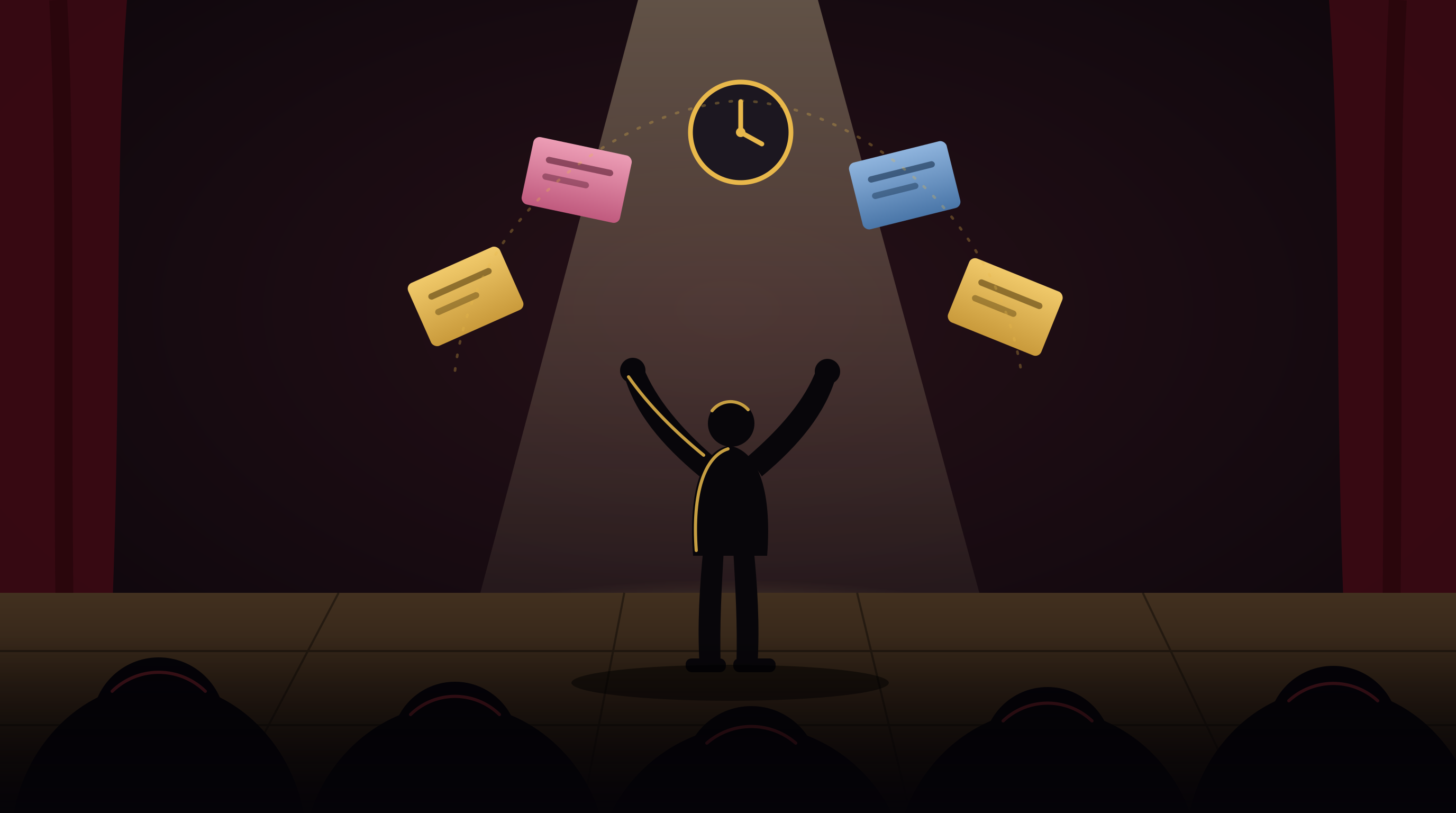
What Does a Scrum Master Actually Do All Day?
The best Scrum Master I ever worked with and the worst Scrum Master I ever worked with had identical calendars.
Same standups. Same syncs. Same retro prep. Same Jira hygiene. If you audited their weeks side by side, you could not tell which one saved a release and which one was, functionally, a very expensive meeting-scheduling service. It took me years to understand why: the calendar is the job description now. What separates the good ones from the rest happens in the gaps between the meetings, and nobody measures the gaps.
So let's answer the question honestly, because the internet won't. Search "what does a Scrum Master do" and you'll get the same aspirational list, written mostly by people who sell the certification: servant leader, coach, facilitator, impediment remover, change agent. That's the brochure.
The honest short answer: a Scrum Master facilitates the team's Scrum ceremonies, maintains the board and its reports, and manufactures legibility — turning the team's messy reality into charts, statuses, and updates that management can consume. In most organizations, impediment removal and coaching are a rounding error of the actual week.
I've worked next to dozens of Scrum Masters. Here's what the day actually looks like.
The Official Version First
Fair is fair. The Scrum Guide — all 14 pages of it — defines the Scrum Master as accountable for the team's effectiveness. A "true leader who serves." They coach the team in self-management, cause the removal of impediments, ensure Scrum events happen and stay productive, and help the wider organization understand empirical product development.
Notice something about that list: almost none of it is inherently full-time. The Guide describes a function, not a 40-hour calendar. The industry turned it into a headcount, and then the headcount needed to justify itself.
Hold that thought. It explains the rest of this article.
The Honest Calendar
A composite day, assembled from recurring patterns. If you're a developer, check it against the Scrum Master three desks away. If you're a Scrum Master, check it against your screen.
9:00 — The standup. Fifteen minutes, in theory. The Scrum Master runs the meeting about work they don't do, asking people to summarize yesterday for a card wall that already shows it.
9:20 — Post-standup Jira hygiene. Moving the cards that got mentioned. Adding comments. Flagging the blocked ticket. This is called "keeping the board healthy," and it's the purest form of motion mistaken for progress: the work happened yesterday; this is its paperwork.
10:00 — The sync. Scrum of Scrums, or the dependency call, or the "alignment" with the other squads. The Scrum Master represents the team's status to people who represent other teams' statuses. Information about work, exchanged by people who don't do the work.
11:00 — The deck. Sprint metrics for leadership: velocity trend, burndown screenshot, RAG status. This consumes more creative energy than anything else in the day, because the numbers must look concerning enough to justify the role and reassuring enough to avoid questions.
13:00 — "Coaching." In the brochure, this hour is teaching self-management. In practice it's chasing: pinging developers for estimates, statuses, and ticket updates that feed the 11:00 deck. The team experiences this not as coaching but as surveillance with a smile.
14:00 — Retro prep. Choosing a Miro template. An icebreaker. Column names — "Liked / Learned / Lacked" this sprint, nautical theme next sprint. The dysfunctions to be discussed remain identical; the format rotates.
15:00 — Refinement facilitation. Reading tickets aloud to the people who will estimate them, then recording the numbers the senior engineer was always going to say.
16:00 — The impediment. One arrives! The staging environment is down. The Scrum Master's removal procedure: forward the Slack message to the platform channel, add it to the "blockers" column, and report it tomorrow at 9:00. The actual removal will be done by an engineer.
17:00 — Confluence. Updating the sprint page nobody reads, for the audit nobody scheduled.
Now count. Minutes spent touching the product: zero — which is expected; it's not a building role. Minutes spent removing an impediment the team couldn't have removed faster themselves: maybe fifteen. Minutes spent producing and transporting information about the work for people above the team: nearly all of them.
That's the honest answer to the question. The role, as staffed in most companies, is not a servant leader. It's a legibility engine — a full-time translator between the people doing the work and the hierarchy that wants dashboards about it.
The Three Things the Great Ones Actually Do
I said the best and worst had identical calendars. Here's what the best one did between the meetings, and why I'd hire her again tomorrow — without the title.
She was a shield. Every status request, every "quick question from the PMO," every executive drive-by hit her first and died there. Her team got four-hour blocks of silence in a company that had forgotten silence existed. That alone was worth a salary.
She spent political capital on real impediments. Not forwarding the Slack message — walking to the infrastructure director's desk and not leaving until the staging environment had an owner and a date. Impediment removal that matters requires organizational muscle, and she'd built it deliberately.
She made dysfunction undeniable. When leadership kept injecting mid-sprint "urgencies," she didn't run a retro about it. She tracked three months of interruptions, priced the context-switching, and put a single number in front of the VP. The interruptions stopped. Data, allies, and patience — the only change method that survives contact with a real org.
Notice what those three things have in common: authority. Real shielding, real unblocking, and real confrontation all require power the Scrum Master role doesn't come with. That's the structural tragedy of the job: it assigns responsibility for the team's effectiveness while withholding every lever that affects it. The great ones compensate with personal credibility — and then get promoted into engineering management or product, where the levers live. The role systematically exports its best people and keeps the calendar-operators.
The Market Has Answered This Question Too
This isn't just my ledger. The job market has been running the experiment at scale.
Scrum Master postings have fallen roughly 40% since 2023, with UK contract coaching roles down about 65%. The share of Scrum teams with a dedicated Scrum Master dropped from about 54% in 2020 to around 37% in 2025. In January 2023, Capital One eliminated around 1,100 technology roles in what the bank itself called its agile job family. Meanwhile, Delivery Manager postings are up roughly 25% year over year: companies consolidating facilitation, project management, and accountability for outcomes into one role. And the routine layer of the job — scheduling, reminders, standup summaries, board hygiene — is precisely the layer AI tooling automates first.
Run the vacation test on your own team. If your Scrum Master disappeared for a month, what breaks? If the honest answer is "the reporting," you've located the role's actual function. If the answer is "prioritization fights reach the developers, three blockers rot for weeks, and two teams ship conflicting changes" — congratulations, you have one of the great ones. Whether the title is the right price for that is a different question.
If This Is Your Job Title
No pleasure in any of this if it's your LinkedIn headline, so here's the constructive part, from someone who's watched which Scrum Masters survived every reorg.
Stop optimizing the ceremonies; start owning an outcome. Learn the system your team builds — not to code it, but to never again facilitate a conversation you can't follow, because the ones who couldn't follow it never recovered the room. Trade the metrics deck for one number leadership actually feels (lead time, escaped defects, cost of an interruption). Build the political capital to kill a meeting, not just to schedule one. The people who did that stopped being Scrum Masters within two years — not because the market rejected them, but because they'd become something the market still pays for: someone who removes real obstacles between working software and the people waiting for it.
The ceremony operators, the ones whose entire value proposition is the calendar — the market is answering them right now, one job posting at a time.
FAQ
What does a Scrum Master do on a daily basis? Officially: facilitate Scrum events, coach the team, and remove impediments. In practice, most of the day goes to running ceremonies, maintaining the board, syncing with other roles, and producing status reporting for management. Genuine coaching and impediment removal are typically a small fraction of the week.
Is Scrum Master a full-time job? The Scrum Guide describes a function, not a 40-hour role. On mature teams the function shrinks; that's why the share of teams with a dedicated Scrum Master fell from ~54% in 2020 to ~37% in 2025, and why many companies now fold it into engineering management or a Delivery Manager role.
What's the difference between a Scrum Master and a project manager? A project manager owns scope, schedule, and outcomes with (some) authority. A Scrum Master owns the process and its ceremonies with none. The industry is quietly re-merging them: Delivery Manager postings — facilitation plus accountability — are growing while Scrum Master postings shrink.
Do teams actually need a Scrum Master? Teams need the function sometimes: someone to shield focus, unblock organizational obstacles, and make dysfunction visible. Whether that requires a dedicated headcount is the question the market is currently answering — mostly no. Senior engineers or engineering managers often absorb the function.
Is the Scrum Master role dying? The dedicated role is contracting sharply — postings down ~40% since 2023, entire agile job families eliminated at large enterprises without delivery collapsing. The useful skills inside the role (shielding, unblocking, change with data) survive under other titles.
What makes a good Scrum Master? Authority they built themselves: technical credibility, political capital, and ownership of a real outcome. The good ones protect the team's time, spend capital on real impediments, and put numbers on dysfunction. Those are management skills — which is why the good ones usually get promoted out of the title.
Benjamim Castell writes about the distance between process as promised and delivery as practiced.
Most of them were trapped in what I call Risk Management Theater and didn't even know
Keep reading

Code Quality Is a C-Suite Problem: How Agile Ceremonies Became Executive Cover
Technical debt costs $1.52 trillion annually. Every piece traces back to an executive decision. Here`s how Agile ceremonies help leadership avoid that conversation.
How to Calculate Story Points in Agile (and What the Formula Is Hiding)
There is no story point formula. How teams really calculate them with Fibonacci and planning poker, what the ritual costs, and the honest alternative.
What Is SAFe? The Honest Definition of the Scaled Agile Framework
SAFe is the most adopted framework for "scaling agile" in large enterprises, and the most profitable. Here`s what it actually is, how it`s supposed to work, and what it becomes inside real companies.
Get the next war story in your inbox
Independent essays and practical models about what the process claims versus what actually ships. Published under a protected pen name. Free, no spam, unsubscribe anytime.
No certifications sold. No process religion. Unsubscribe anytime.